
When experts lose track of the big picture
Despite all the technology available, humans remain the most important and, at the same time, the most error-prone component in the security system. In aviation, it was recognized early on that accidents often happen not because of technical defects, but because of poor communication or wrong decisions made under stress. During a cyberattack, teams are under extreme psychological pressure. The release of cortisol and adrenaline often leads to “tunnel vision”. Analysts fixate on insignificant details while massive amounts of data are leaking elsewhere.

Psychological stress reactions in cyber security
The effects of stress are measurable and dangerous:
| Stress-Effect | Impact on cybersecurity |
| Fixation | Analyst overlooks the spread in the data centre because he only checks one laptop. |
| Cognitive overload | Critical alerts are missed due to “alert fatigue.” |
| Decision Paralysis | Hesitation to disconnect the network for fear of disrupting operations. |
| Normalcy Bias | Suspicious actions are mistakenly interpreted as “normal” because thresholds are unknown or were not established in advance. |
The Solution: Crew Resource Management (CRM)
To address this, aviation uses CRM training. In cybersecurity, we need to apply the same principles to incident response teams and SOCs. Through simulations (tabletop exercises) and red teaming, teams learn to communicate in a structured way under stress and remain confident in their actions. This is also a core ISO 27001 requirement for competence and awareness.
Preventing an Economic Crash Landing
The goal of all these efforts is to avoid a “digital crash landing.” The consequences of weaknesses in information security today are ruthless:
- Despite paying a ransom, the Einhaus Group had to file for bankruptcy because losses could no longer be compensated.
- In 2025, Jaguar Land Rover suffered £1.9 billion in damages and could only be saved through government guarantees.
Proactive action means understanding your dependence on IT systems and having business continuity plans (ISO 27001 Control A.17) in place to ensure operations can continue during an attack.
Conclusion: The CISO as Navigator
Cybersecurity is a matter of professionalism, preparation, and organizational maturity. A modern CISO acts as a navigator, guiding the company through the storm on three pillars.
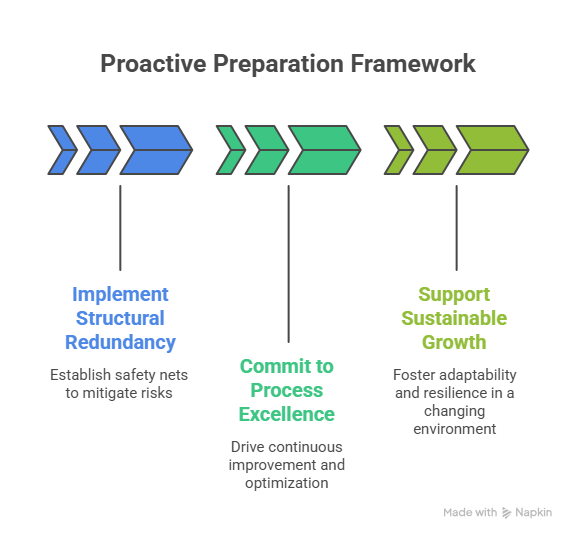
When was the last time your crisis team trained under real stress conditions? Is your team ready for the “storm”?
For more information, visit our IT-Security webpage: https://patecco.com/it-security/