
The era of reactive chaos is over
In traditional IT, security was often seen as a tiresome appendage – a component that only received resources once the damage had already been done. We called this “firefighting”. But in an era of „permacrises“ and „polycrises“, where cyber threats jeopardise the stability of entire economies, this model of reactive chaos is doomed to failure.
My name is Albert Harz. As an ISO27001 lead auditor and long-standing CISO, I see time and again that companies that do not make information security a top priority are risking their very existence. The role of the CISO has therefore undergone a fundamental change: away from a purely technical function and towards a central strategic pillar of corporate management.

What we can learn from aviation
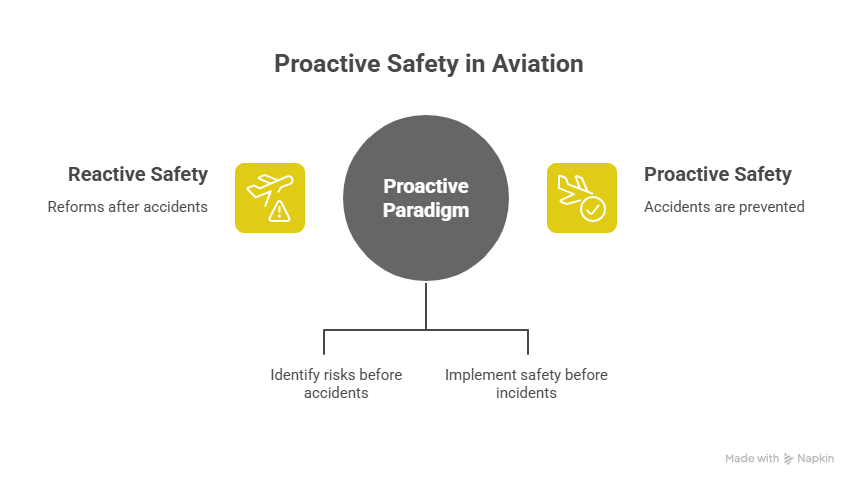
Why is aviation the safest mode of transport in the world? Because it operates in a high-risk sector where human error or technical defects can have immediate catastrophic consequences – much like a ransomware attack can drive a company into bankruptcy today. Aviation history teaches us that true safety was only achieved through the transition to a proactive paradigm. In the past, reforms were often merely reactions to accidents. Today, the Aviation Safety Management System (SMS) is based on identifying hazards before they lead to accidents.
ISO 27001: Your flight plan for emergencies
A proactive Information Security Management System (ISMS) in accordance with ISO 27001 is essentially nothing more than a detailed flight plan that includes risk management as a central element. No pilot takes off without having alternative airports, fuel reserves and weather forecasts in mind.
Here is a direct comparison of the management approaches:
| Aspect | Reactive chaos (legacy IT) | Proactive Resilience (ISO 27001) |
| Focus | Troubleshooting after occurrence | Anticipation and Prevention |
| Methodic | Ad-hoc-Decisions | Structured processes/Playbooks |
| Culture | Search for the guilty | Error-tolerant learning culture |
| Redundance | Cost factor | Basic technical principle |
Conclusion: Security is a management discipline
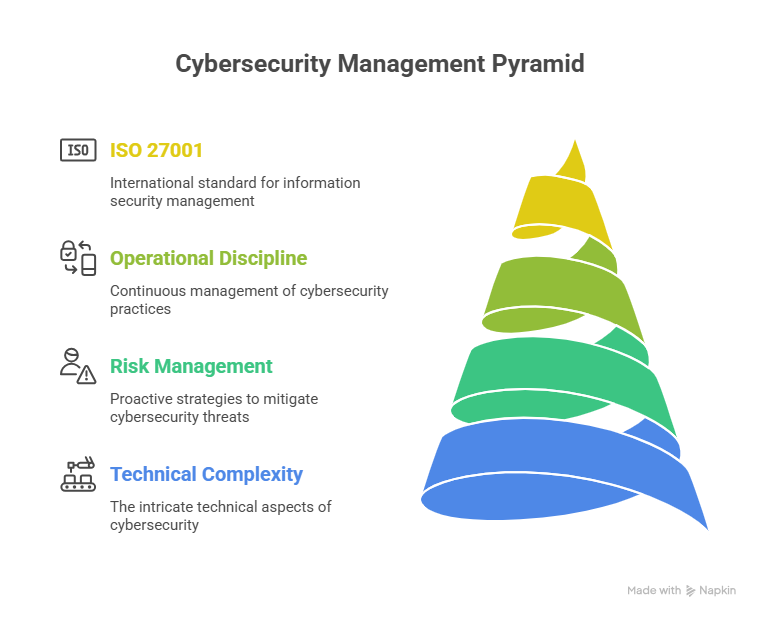
Company management must understand that cyber security is not a technical problem that can be “solved” once and for all. It is an operational discipline that must be continuously “managed” – just like flight operations. A CISO who has mastered ISO 27001 uses this international gold standard to translate technical complexity into proactive risk management.
How secure is your “flight plan” for 2026? Are you still relying on ad-hoc decisions, or are you already steering proactively?
For more information, visit our IT-Security webpage: https://patecco.com/it-security/