
The role of the Chief Information Security Officer (CISO) has never been more complex or more critical. The rapid evolution of digital ecosystems, the rise of AI-driven technologies, and the growing sophistication of cyber-threat attackers are fundamentally changing the cybersecurity environment. To stay ahead, CISOs must anticipate risks, adapt rapidly, and build security strategies that advance as quickly as the threats they face. Success requires a combination of technical expertise, strategic foresight, and cross-functional collaboration to protect critical assets, maintain business continuity, and foster organizational resilience.
Top Challenges CISOs Face Today
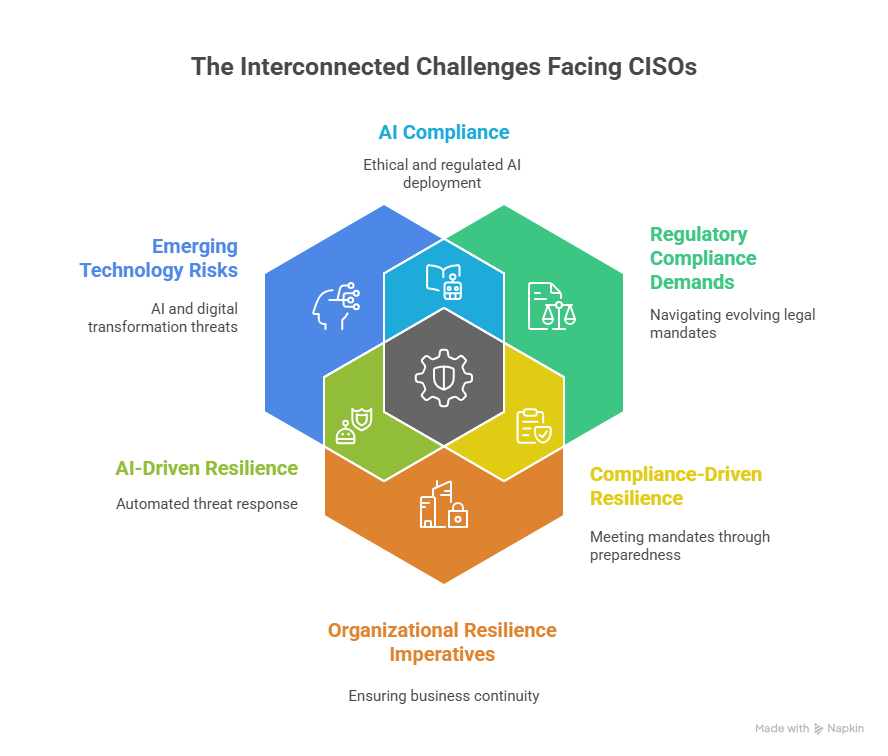
1. Securing Data in an AI-Driven World
Artificial intelligence transforms how data is created, processed, and shared, but it also introduces unique risks that traditional security controls cannot fully address. CISOs must safeguard against AI-powered cyberattacks that can automate threat discovery. They must also ensure that internal AI systems are trained on clean, compliant data and that AI models themselves do not leak proprietary or sensitive information.
2. Responding to Increasing Compliance Demands
With new guidelines and mandates like the ISO 27001 standard and the NIS2 Directive, the role demands agility. CISOs must operate within a rapidly changing regulatory framework that is becoming increasingly detailed, with tighter reporting deadlines, higher accountability, and broader enforcement scopes. Compliance now extends beyond traditional IT controls, requiring alignment with operational technology, supply-chain practices, and international data requirements. As a result, CISOs must collaborate closely with legal, risk, and governance teams to ensure that compliance frameworks are integrated into daily operations. Building a proactive compliance strategy not only reduces exposure to penalties but also strengthens trust with customers, partners, and regulators.
3. Ensuring Organizational Resilience
CISOs must ensure that resilience frameworks include robust incident response playbooks, disaster recovery capabilities, and well-tested business continuity plans. They must also simulate crisis scenarios and ensure that executive leadership understands their roles during an emergency. As threat attackers increasingly target critical systems and supply-chain links, resilience becomes a strategic necessity rather than a technical function.
4. IAM – Adopting a Holistic Approach to Identity Security
CISOs must adopt a holistic identity strategy that encompasses lifecycle management, privileged access controls, multi-factor authentication, and continuous monitoring. As hybrid work models and SaaS adoption expand, the number of identities grows exponentially. To stay ahead, CISOs need to implement Zero Trust principles, automate identity governance, and ensure that identity security does not compromise user experience or productivity.
5. Data Breaches and Ransomware Attacks
Data breaches and ransomware continue to escalate in both frequency and impact. CISOs must strengthen detection capabilities, conduct regular security resilience assessments, and ensure immediate response measures are in place. They also need to focus on minimizing exposure time to potential attacks, improving backup integrity, and ensuring encrypted, offline recovery options are available. Additionally, successful breach management requires clear communication plans and collaboration with legal, compliance, and executive teams to handle regulatory reporting and reputational fallout.
Immediate Actions CISOs Can Take to Strengthen Their Cybersecurity Framework
To stay ahead of emerging threats and safeguard their organizations, CISOs must take proactive steps to strengthen their cybersecurity framework. These immediate actions focus on assessing risks, enhancing threat detection, and building the leadership capabilities necessary to manage an increasingly complex infrastructure. Implementing these measures can help organizations not only defend against attacks but also respond effectively when incidents occur.
1. Assess and Assure Cybersecurity and Data Governance Risks
Start with a comprehensive assessment of your current security infrastructure. A risk-based view allows you to understand critical vulnerabilities, prioritize remediation efforts, and align security initiatives with business goals. This includes evaluating governance, data protection, third-party risk, operational resilience, and technological readiness.
2. Invest in Advanced Threat Detection and Response Capabilities
Proactively detecting and responding to threats is critical for the IT-security teams. CISOs should implement real-time monitoring, automated threat intelligence, and endpoint detection and response (EDR) solutions to reduce dwell time and limit potential damage. Additionally, integrating these capabilities with IBM Security Orchestration, Automation, and Response (SOAR) platform can streamline incident response, improve coordination across teams, and provide actionable insights to continuously enhance defenses. This approach ensures that the organization is not only prepared to prevent attacks but also capable of responding effectively when breaches occur.
3. Preparation Is the Cornerstone of Effective Cybersecurity Leadership
To prepare for the challenges that CISOs will face in the coming years, it’s essential to invest in continuous learning, develop cross-functional leadership skills, and build strong relationships across the organization. Enhancing technical expertise, understanding regulatory updates, and mastering crisis communication will ensure you are well-positioned to lead through complexity.
To support organisations in meeting compliance demands, PATECCO provides expert guidance on NIS2 compliance and offers a free initial consultation to help CISOs gain clarity on their current state, address gaps, and build a sustainable, integrated compliance strategy.