As organizations continue to expand their digital ecosystems, privileged accounts have become one of the most attractive targets for cybercriminals. Administrators, IT teams, third-party vendors, service accounts, and automated systems often possess elevated permissions that provide direct access to critical infrastructure, sensitive data, and core business applications.
Without a structured Privileged Access Management (PAM) strategy, these accounts can quickly become a major cybersecurity liability. Unmanaged privileged access creates security gaps, increases operational risk, and makes regulatory compliance significantly more difficult. Modern organizations can no longer rely on manual processes, shared passwords, or fragmented access controls. PAM is no longer a nice-to-have, but a critical component of modern security.
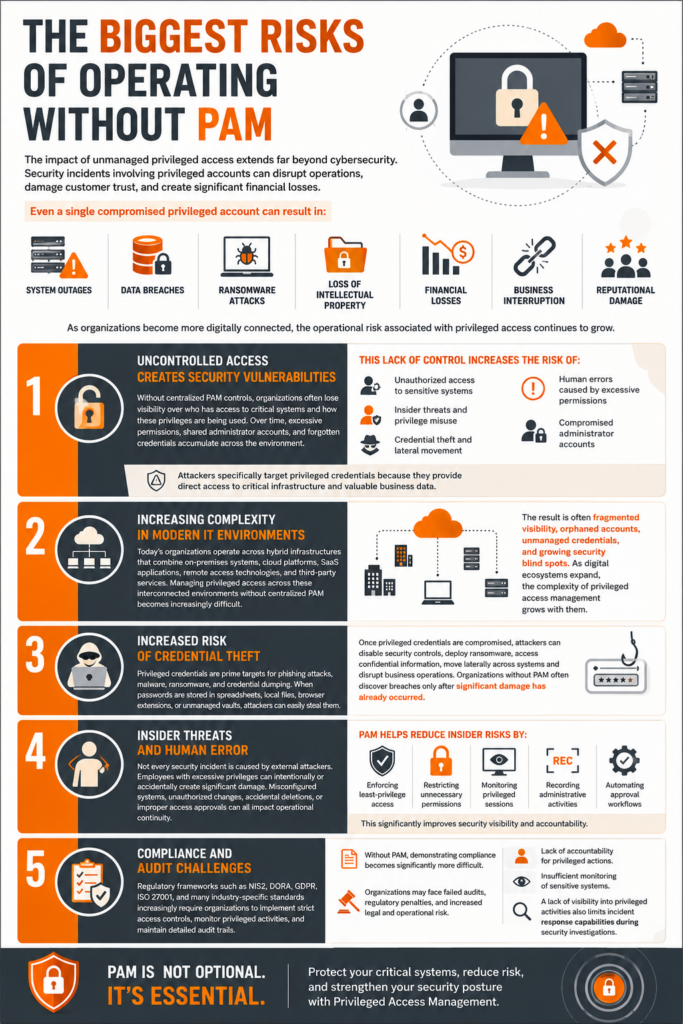
The Biggest Risks of Operating Without PAM
The impact of unmanaged privileged access extends far beyond cybersecurity. Security incidents involving privileged accounts can disrupt operations, damage customer trust, and create significant financial losses. Even a single compromised privileged account can result in system outages, data breaches, ransomware attacks, loss of intellectual property, reputational damage, business interruption. As organizations become more digitally connected, the operational risk associated with privileged access continues to grow.

1.Uncontrolled Access Creates Security Vulnerabilities
Without centralized PAM controls, organizations often lose visibility over who has access to critical systems and how these privileges are being used. Over time, excessive permissions, shared administrator accounts, and forgotten credentials accumulate across the environment.
This lack of control increases the risk of:
- Unauthorized access to sensitive systems
- Insider threats and privilege misuse
- Credential theft and lateral movement
- Human errors caused by excessive permissions
- Compromised administrator accounts
Attackers specifically target privileged credentials because they provide direct access to critical infrastructure and valuable business data.
2. Increasing Complexity in Modern IT Environments
Today’s organizations operate across hybrid infrastructures that combine on-premises systems, cloud platforms, SaaS applications, remote access technologies, and third-party services. Managing privileged access across these interconnected environments without centralized PAM becomes increasingly difficult. The result is often fragmented visibility, orphaned accounts, unmanaged credentials, and growing security blind spots. As digital ecosystems expand, the complexity of privileged access management grows with them.
3. Increased Risk of Credential Theft
Privileged credentials are prime targets for phishing attacks, malware, ransomware, and credential dumping. When passwords are stored in spreadsheets, local files, browser extensions, or unmanaged vaults, attackers can easily steal them. Once privileged credentials are compromised, attackers can disable security controls, deploy ransomware, access confidential information, move laterally across systems and disrupt business operations. Organizations without PAM often discover breaches only after significant damage has already occurred.
4. Insider Threats and Human Error
Not every security incident is caused by external attackers. Employees with excessive privileges can intentionally or accidentally create significant damage. Misconfigured systems, unauthorized changes, accidental deletions, or improper access approvals can all impact operational continuity.
PAM helps reduce insider risks by:
- Enforcing least-privilege access
- Restricting unnecessary permissions
- Monitoring privileged sessions
- Recording administrative activities
- Automating approval workflows
This significantly improves security visibility and accountability.
5. Compliance and Audit Challenges
Regulatory frameworks such as NIS2, DORA, GDPR, ISO 27001, and many industry-specific standards increasingly require organizations to implement strict access controls, monitor privileged activities, and maintain detailed audit trails. Without PAM, demonstrating compliance becomes significantly more difficult. Organizations may face failed audits, regulatory penalties, lack of accountability for privileged actions, insufficient monitoring of sensitive systems and increased legal and operational risk. A lack of visibility into privileged activities also limits incident response capabilities during security investigations.
How PAM Reduces Risk
Privileged Access Management helps organizations secure, control, and monitor elevated access across their environments. Modern PAM solutions strengthen security through secure credential vaulting, multi-factor authentication (MFA), session monitoring and recording, role-based access controls, automated password rotation, and least-privilege enforcement. In addition, real-time monitoring and reporting provide organizations with greater visibility into privileged activities and potential security threats. By centralizing privileged access management, organizations can significantly reduce attack surfaces, improve accountability, strengthen compliance, and enhance overall cybersecurity resilience.
Click on the image to view the infographic.