
Managing identities and access is at the core of every organization’s security strategy. Whether implementing a new Identity and Access Management (IAM) solution or improving an existing one, establishing the right structure from the outset is essential. A well-planned approach not only strengthens security but also ensures efficiency, scalability, and positive user experience. In this article, PATECCO outlines key practical steps and best practices that help organizations successfully design and implement IAM projects.
How to structure your IAM project effectively?
A well-structured IAM project is critical for achieving long-term security, operational efficiency, and scalability. Without proper planning and governance, organizations may face costly challenges such as security vulnerabilities, compliance risks, or inefficient user access processes.
A structured IAM initiative helps organizations achieve:
- Clearly defined goals aligned with business objectives
- Seamless integration with existing systems and applications
- Improved user experience through streamlined access processes
- Enhanced security and regulatory compliance
Taking the time to establish the right structure at the beginning lays the foundation for a sustainable and scalable IAM environment.
Key Steps to Building a Successful IAM Project
Step 1: Define IAM Needs and Objectives
Before addressing technical implementation, organizations must clearly define their IAM goals. IAM initiatives may focus on regulatory compliance, improved security, simplified user management, or a combination of these objectives. Establishing clear priorities ensures that the chosen IAM solution aligns with both business requirements and long-term strategic goals.
Step 2: Identify Users and Their Requirements
Understanding the different user groups within an organization is crucial when designing an IAM framework. Employees, customers, and partners often have distinct access requirements.
- Employees typically require secure but efficient access to internal systems, often supported through role-based access control (RBAC).
- Customers expect seamless digital experiences, such as single sign-on (SSO) or passwordless authentication.
- Partners require secure access to shared resources while maintaining strict safeguards against third-party risks.
Recognizing these differences helps organizations design tailored access policies that balance security with usability.
Step 3: Assess the Current IAM Infrastructure
Before introducing new tools or processes, organizations should evaluate their existing IAM environment. This includes identifying gaps, inefficiencies, or overlapping systems. Key questions to consider include:
- Are access rights managed consistently across systems?
- Are there redundant or disconnected IAM solutions in place?
- Where do manual processes create delays or security risks?
Understanding the current IAM system helps guide future improvements and ensures that new solutions address real operational challenges.
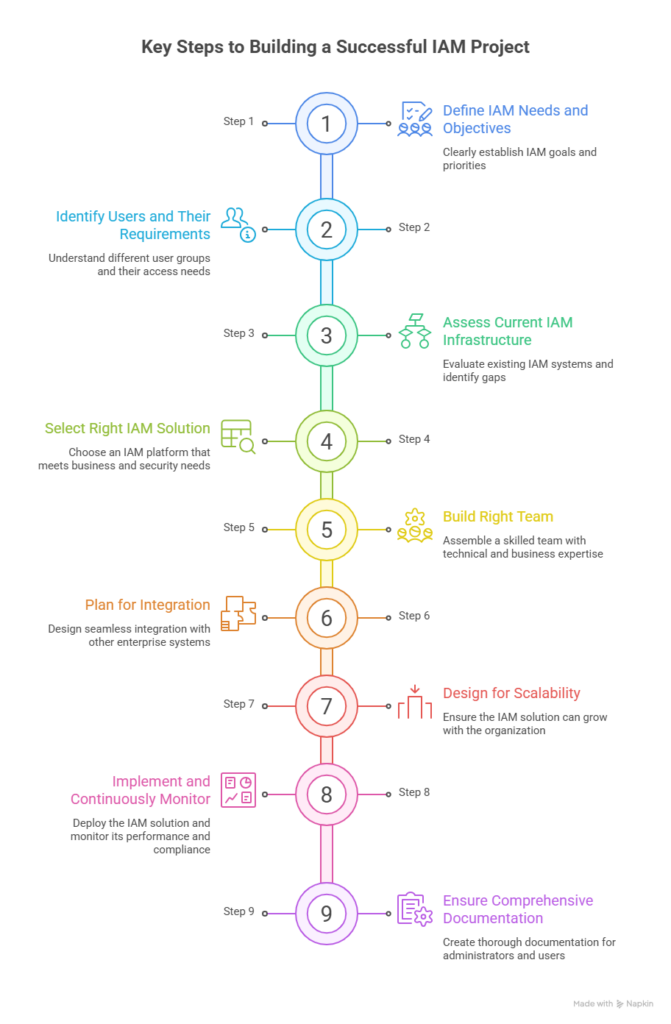
Step 4: Select the Right IAM Solution
Choosing the right IAM platform is a crucial step in the project. Organizations should consider factors such as company size, infrastructure complexity, security requirements, and regulatory obligations. Key capabilities to evaluate may include:
- Multi-factor authentication (MFA)
- Single sign-on (SSO)
- Identity lifecycle management
- Access governance and compliance reporting
Whether the solution is cloud-based, hybrid, or on-premises, it should support both technical requirements and business objectives.
Step 5: Build the Right Team
The success of an IAM project ultimately depends on the people behind it. A strong IAM team brings together professionals who understand technology, business processes, and organizational needs. Successful projects typically involve:
- Technical IAM specialists
- Business stakeholders who understand operational requirements
- Project leaders who align technology and business strategy
Step 6: Plan for Integration
IAM systems rarely operate in isolation. They must integrate seamlessly with other enterprise systems such as HR systems, IT service management (ITSM) platforms and Business applications and directories. Effective integration ensures that identity data flows consistently across the organization, enabling automated provisioning, efficient access management, and improved governance.
Step 7: Design for Scalability
An IAM solution should be designed with future growth in mind. As organizations develop, the IAM framework must be able to support increasing numbers of users, new applications and services, changing security requirements and emerging technologies and authentication methods. A scalable architecture ensures that the IAM system remains effective as the organization expands.
Step 8: Implement and Continuously Monitor
Once the IAM solution is implemented, continuous monitoring becomes essential. Regular reviews help ensure that access policies remain compliant and that potential security risks are detected early. Organizations should monitor system performance, access governance processes, compliance with internal policies and external regulations. Continuous improvement ensures that the IAM system remains effective and aligned with evolving business and security needs.
Step 9: Ensure Comprehensive Documentation
Even after successful implementation and user training, one critical task remains: thorough documentation. Well-structured documentation helps new administrators and managers quickly understand IAM processes and responsibilities. Useful materials may include:
- FAQs and user guides
- Process documentation for onboarding, offboarding, and role changes
- Video tutorials and training resources
Over time, organizational requirements change. Detailed documentation makes it easier to revisit and update IAM processes efficiently while maintaining consistency and transparency.
Common Pitfalls to Avoid
Even well-planned IAM initiatives can face challenges during implementation. Common pitfalls include excessive planning without execution, attempting to implement too many features at once, neglecting the user experience, and failing to involve key stakeholders. Recognizing these risks early allows organizations to address them proactively and keep their IAM projects on track for long-term success.